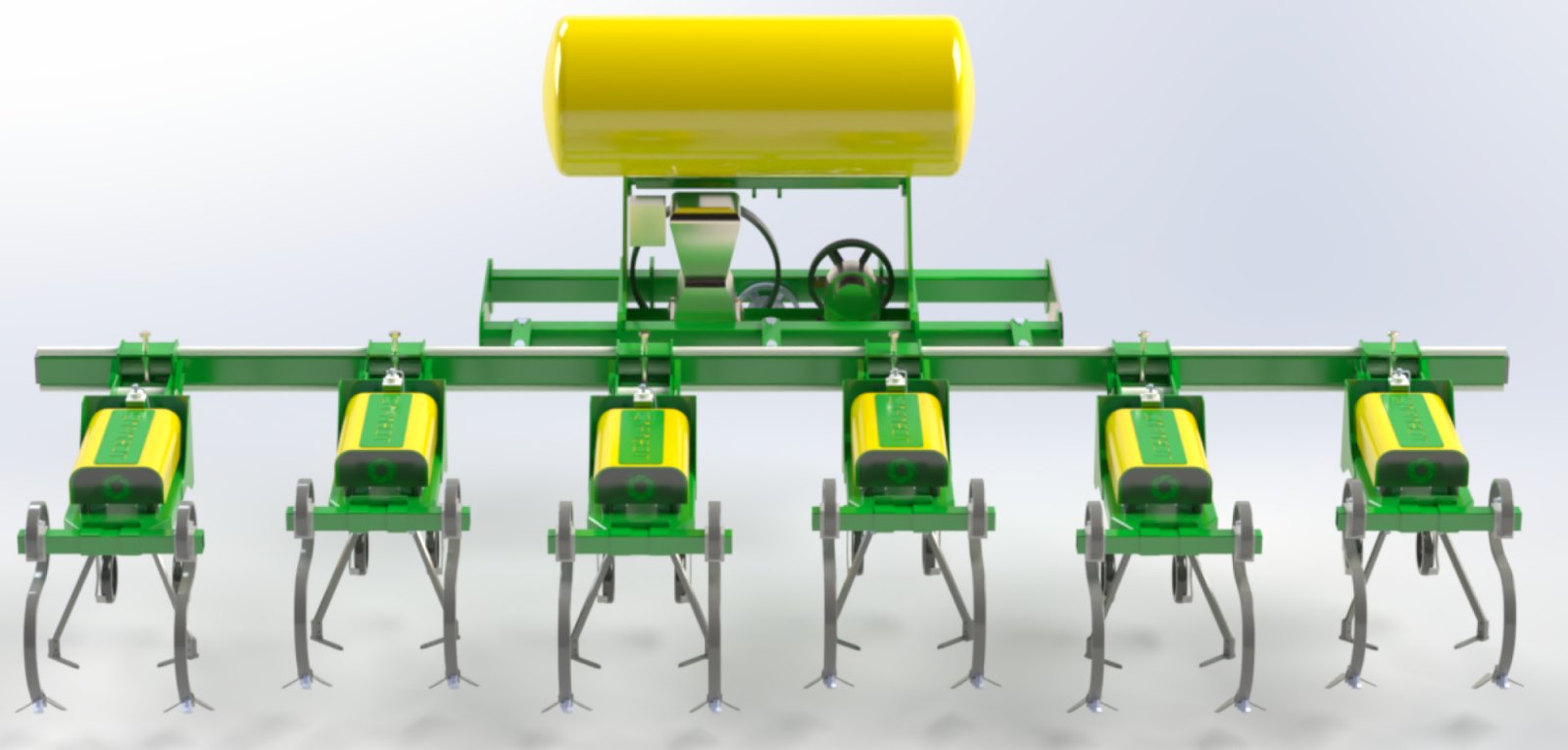
ÇAPABOT - version 3, six-row build
The six-row build of version 3. The modules clamp onto a shared toolbar and can be positioned to the row spacing.
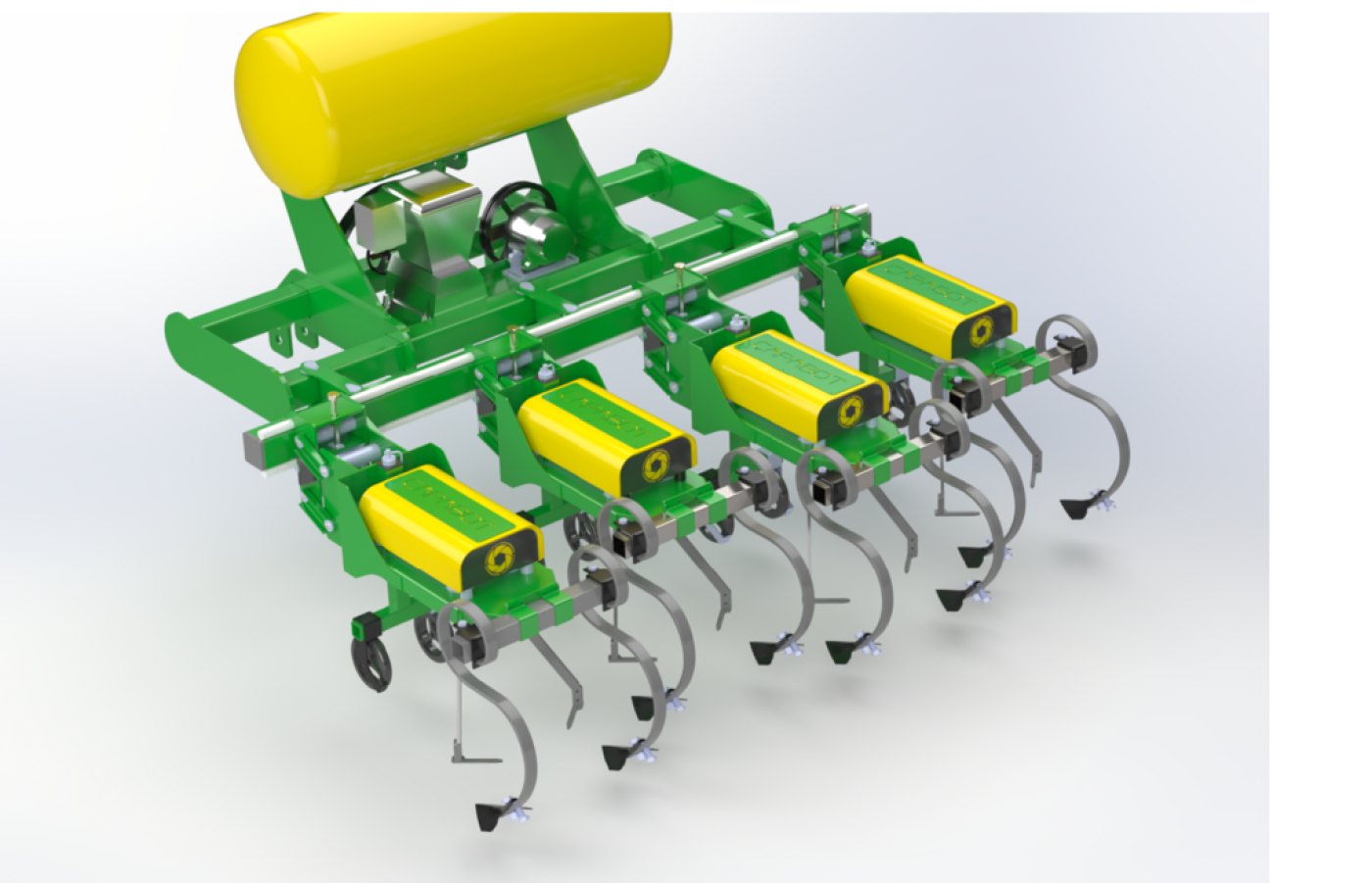
ÇAPABOT - version 3, general assembly
The general assembly of version 3: the shared carrier profile, the modules, their gauge wheels and the sweep blades behind them.
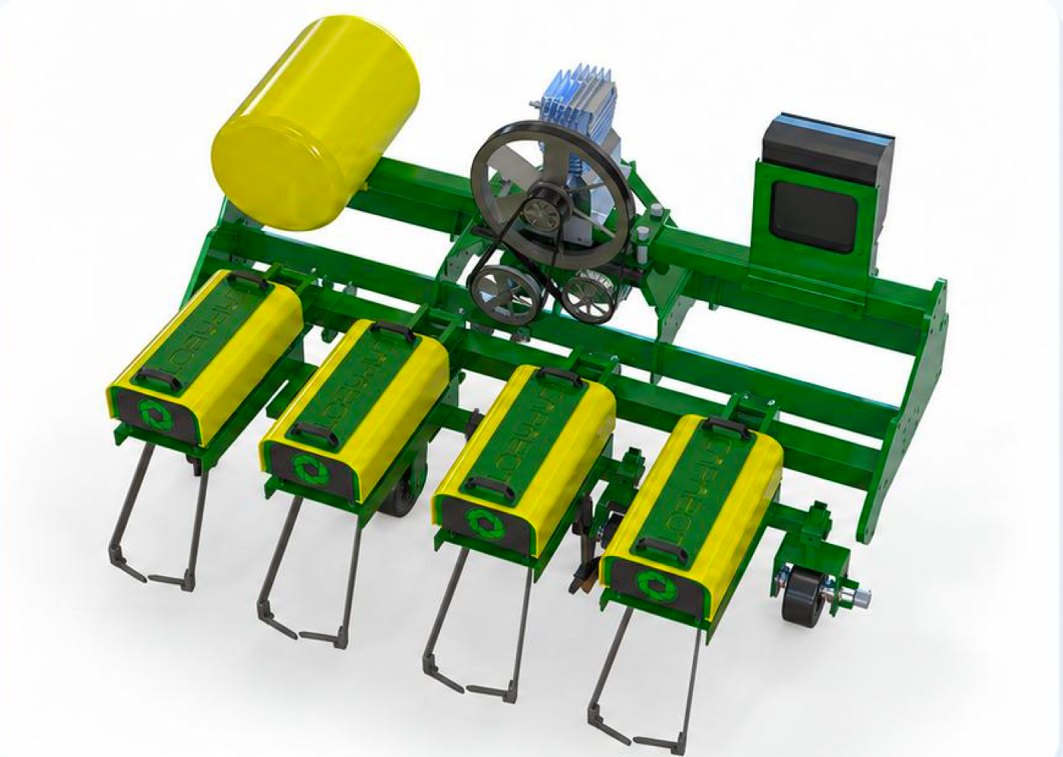
ÇAPABOT - second version, elevated view
The second version seen from above and to one side: all four hoeing modules, the belt-driven compressor, the air tank and the control box in one frame.
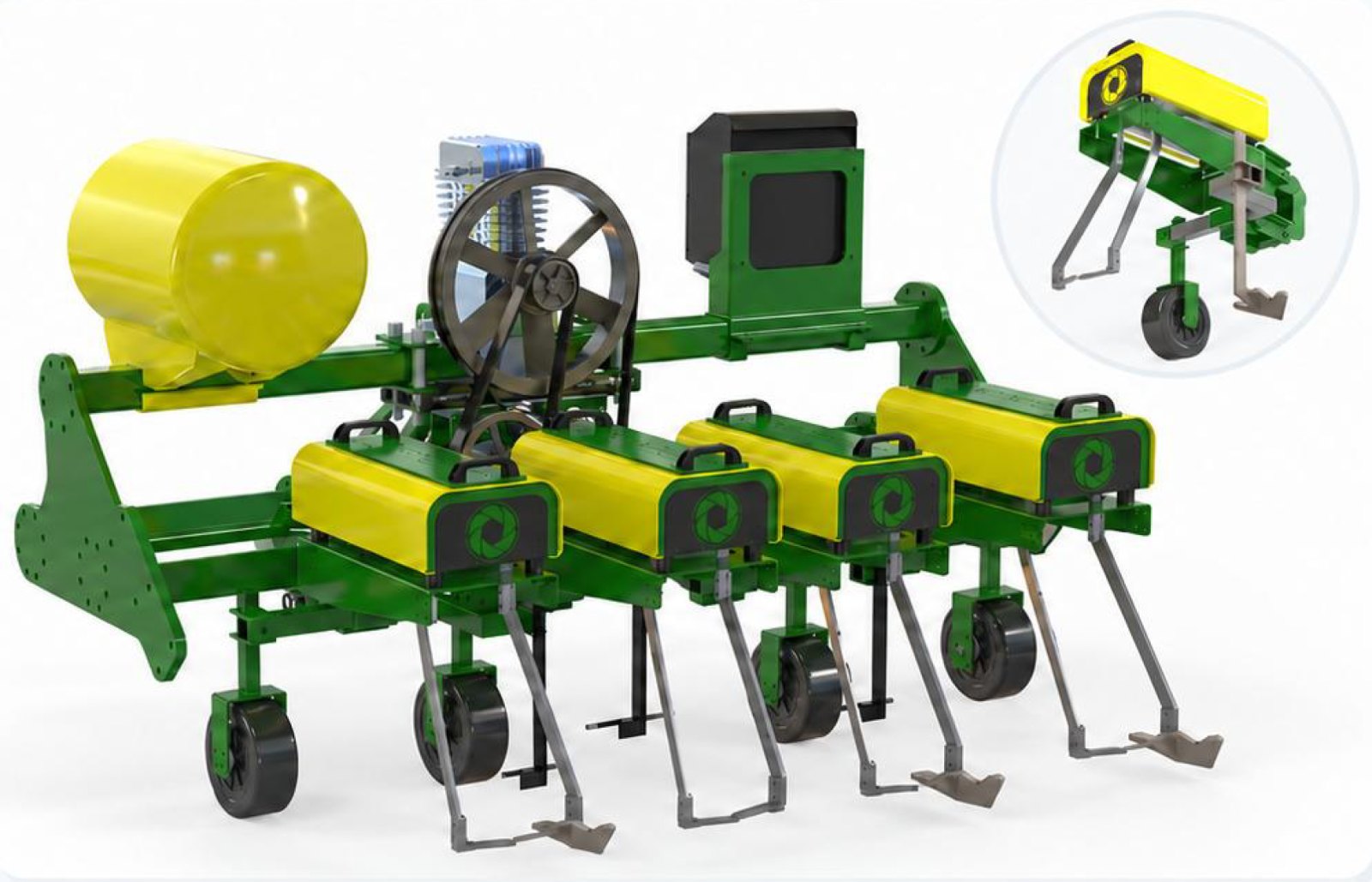
ÇAPABOT - second-version design
Design render of the second version. What changed from the first: every hoeing module now carries its own gauge wheel, and the narrow tines have given way to wide sweep blades. The inset at the top right shows a single module close up.
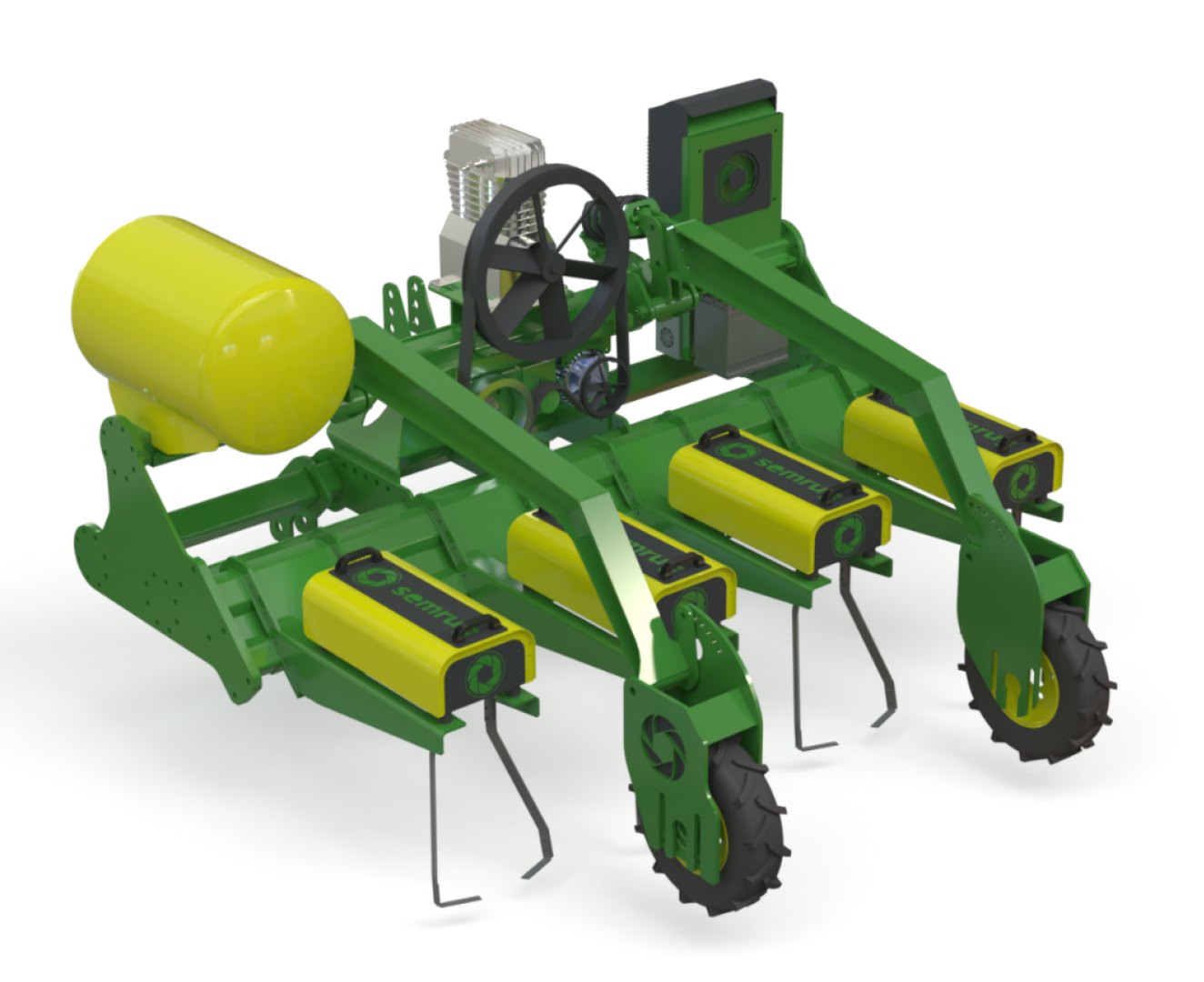
ÇAPABOT - first-version design
Three-dimensional design render of the first version, with four hoeing modules. The PTO-driven compressor, the air tank, one camera module per row and the pneumatic hoeing blades are all visible.
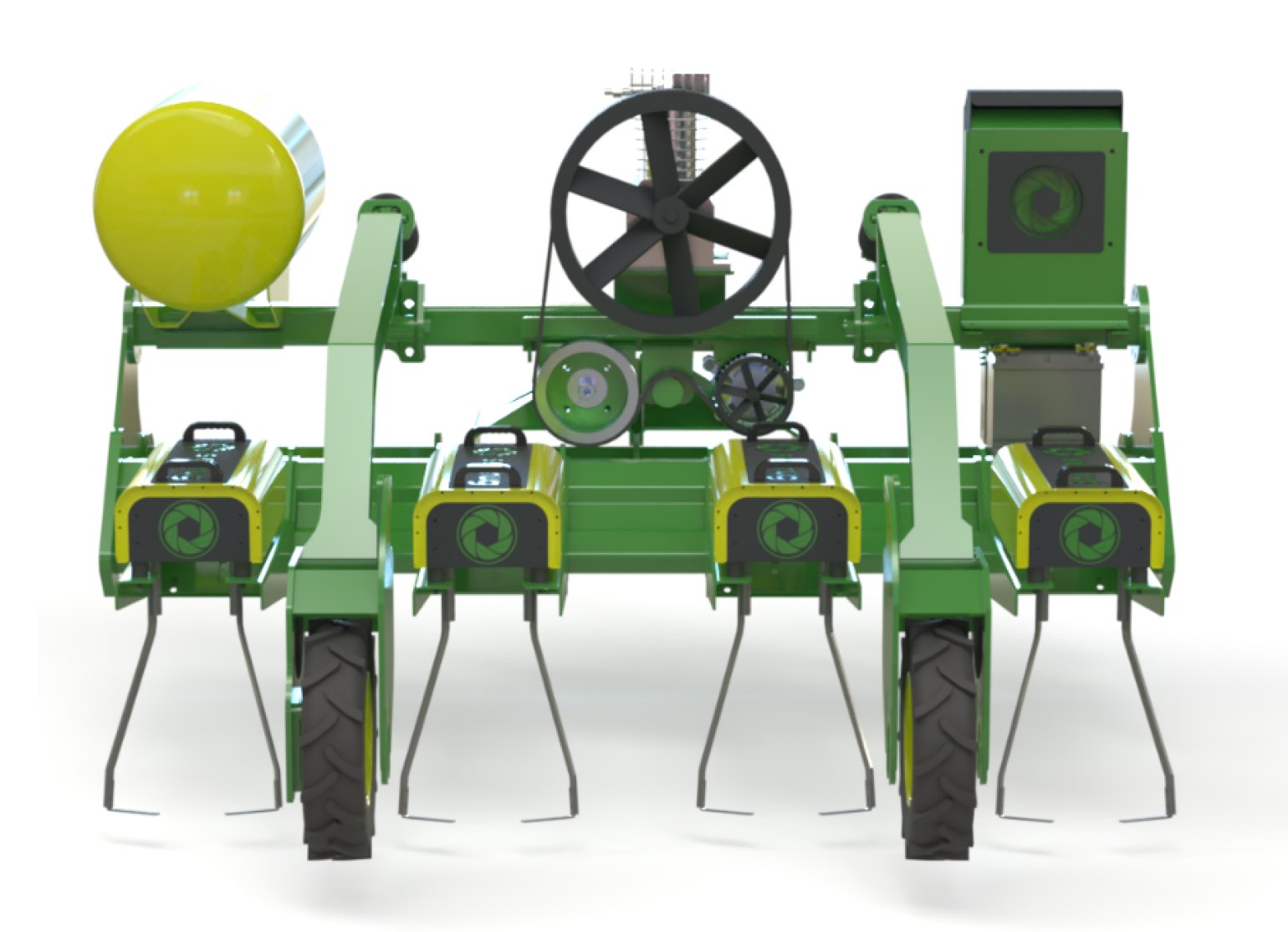
ÇAPABOT - version 1, rear view
The first version seen from behind: the four camera modules, the belt-driven compressor, the air tank and the control box. Pneumatic hoeing blades sit under each module, with gauge wheels between them.
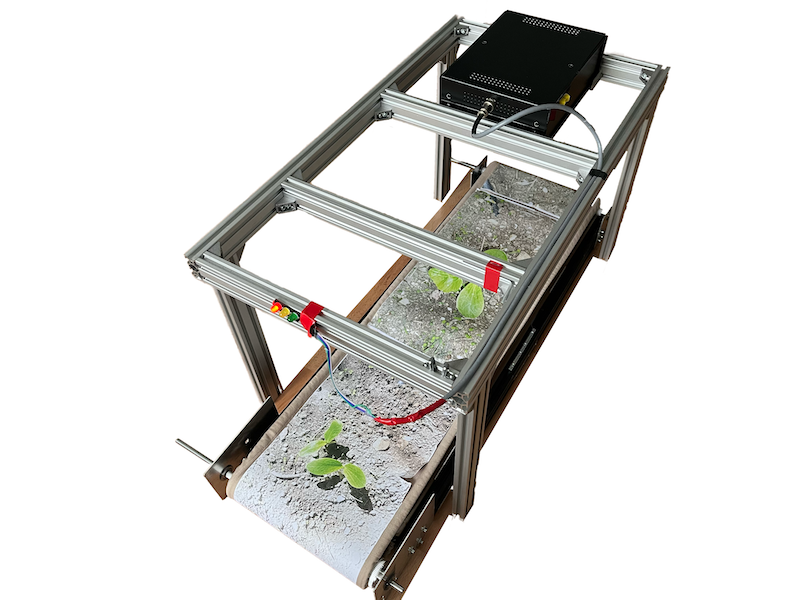
İlk prototip cihazımız
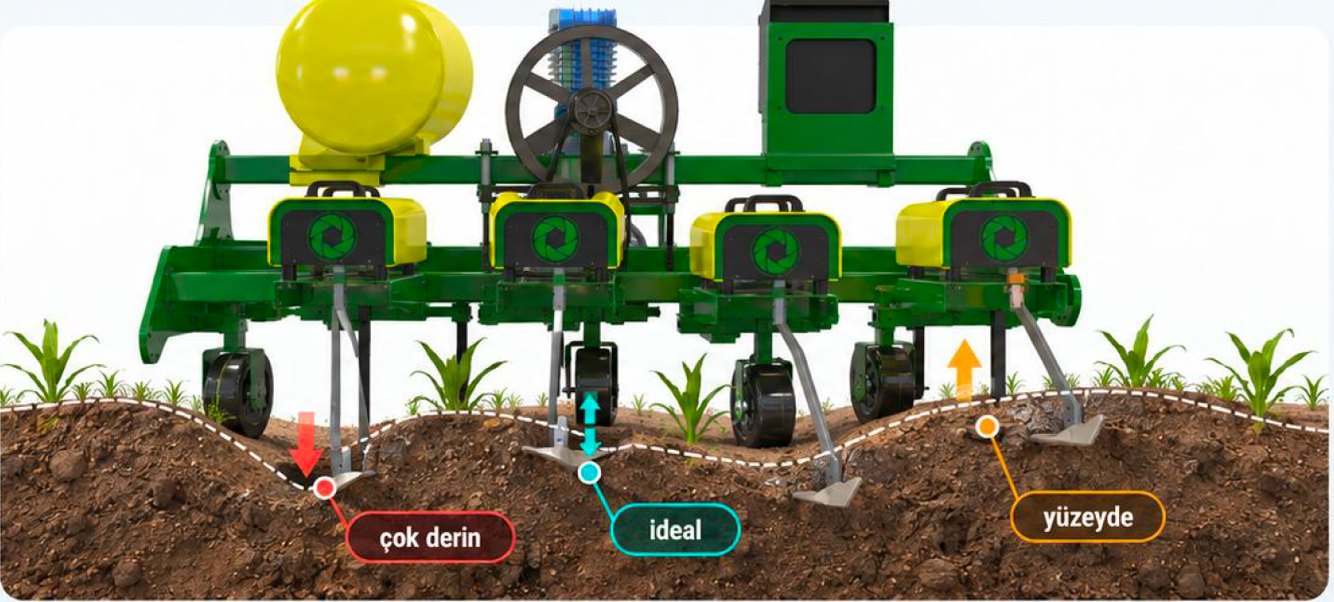
The field problem found with version 1
Field ground is not always level. In version 1 the mechanism housings ran at a fixed height, so over uneven ground some blades cut too deep while others rose towards the surface or left the soil altogether.

ÇAPABOT - first version, how it works
The first version of the in-row smart hoe at work in the field: how the hoeing modules clear the weeds growing on the row while leaving the crop untouched.

ÇAPABOT - field work, August-October 2026
Clips from the second version's field work between August and October 2026: hoeing under lights at night and in daylight.